Irrigation Commons: What Lessons for Sustainable Risk Mitigation?
Swiss agricultural commons have overseen the management of pastures, forests, and water in the Alps for centuries. In Canton Valais, the historic irrigation systems have shaped the cultural landscape of the region as a whole. The resilience of these channels rests in part on their ability to mitigate risk, which is achieved through a particular relation to the landscape.
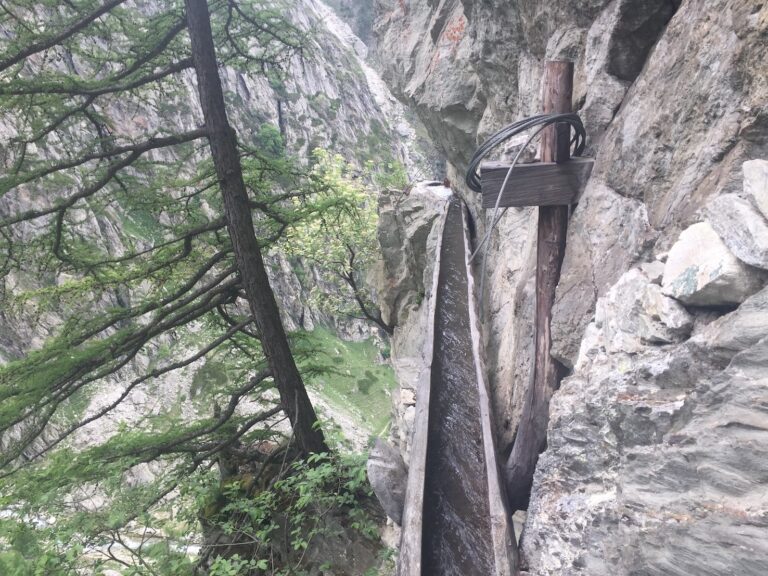
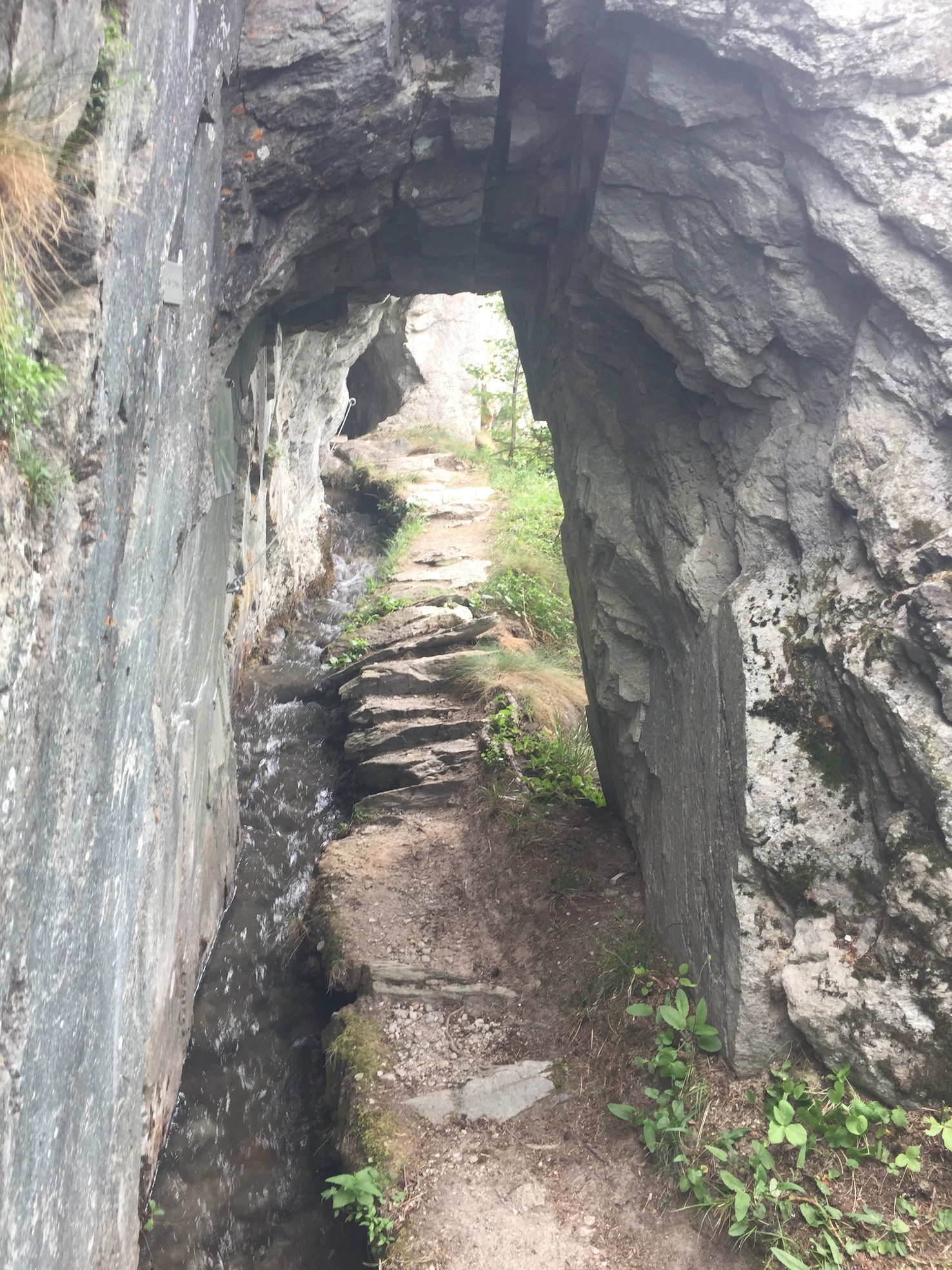
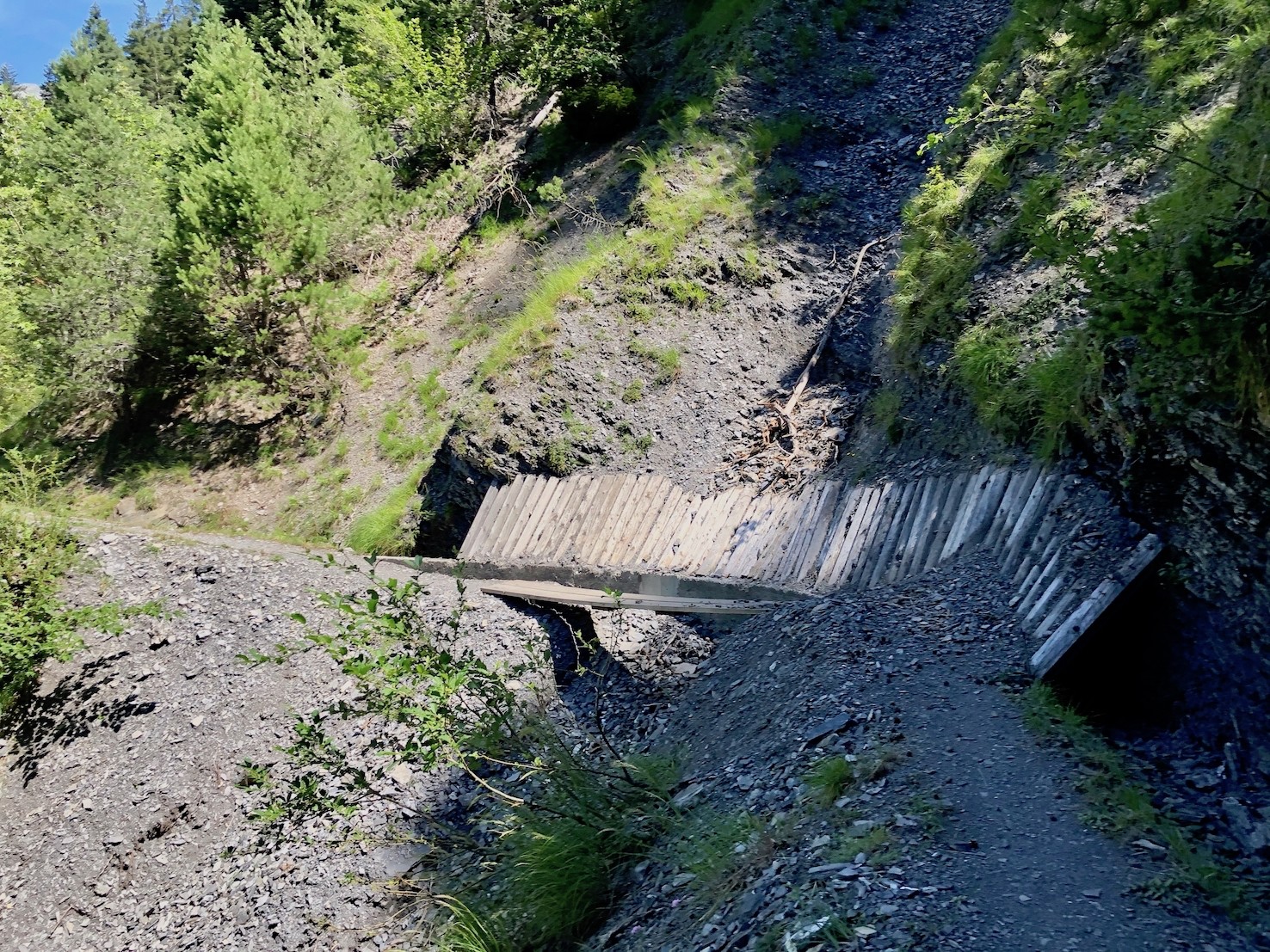
In Valais, centuries-old irrigation channels – locally-named ‘bisses’, ‘Suonen’, or ‘Wasserleitungen’ – source water from glacial streams, carry it along vertiginous rockfaces, and lead it across unstable terrain. They face constant risk of destruction from avalanches, rockfall, and landslides. Even in the villages, where the main channel (bisse-amont) connects to the network of secondary ditches (bisse-aval) to irrigate meadows, orchards, and vineyards, there is a risk of flooding neighbouring fields and structures if the flow of water is left to run unattended (herrenlos). Within this context, the following strategies emerge in response to risk:
Landscape resources are leveraged interdependently to combat risk
The safe operation of alpine irrigation systems requires a system of interdependent institutions of the commons, encompassing the management of alpine pastures, forests, and water. To prevent the erosion of soil-cut channels, turf is sourced from communal pastures. Flat stones are laid vertically and stabilized with soil containing a dense growth of grass and matted roots (Tretschbord). Communal forests are either cleared to create avalanche corridors (dévaloirs), or protected (forêt à ban) to prevent rockfall, landslides, and avalanches. Parts of the forest are dedicated to the provision of timber for communal works such as the construction of irrigation infrastructure.
Natural catastrophes are exploited
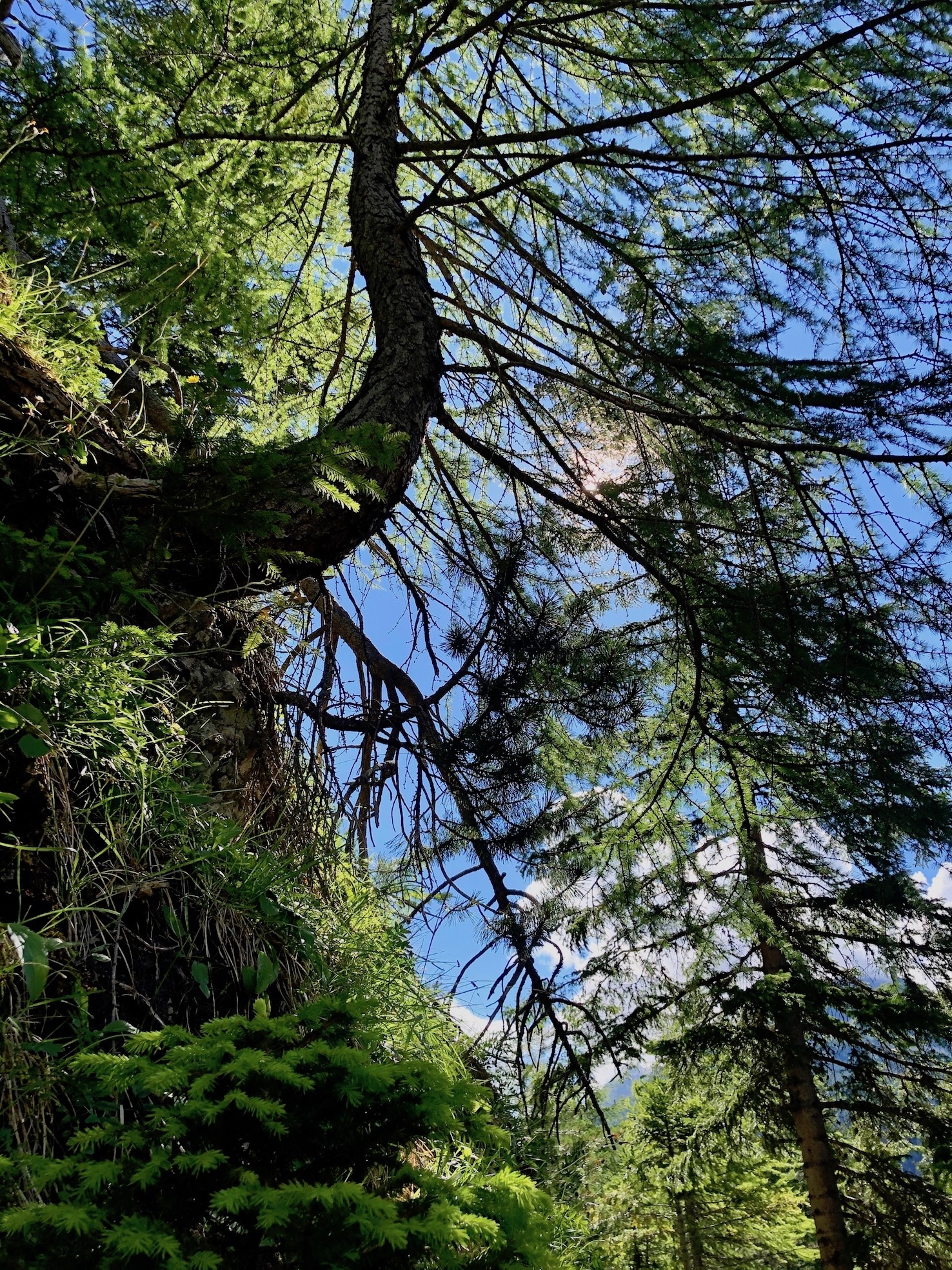
Larch (Larix decidua) provides a water-resistant material for hydraulic structures, and trees are identified in the communal forest to provide long straight segments of timber for channels. Other specimens, deformed by rockfall, present S-shaped trunks, the result of slow tree growth being disrupted by a natural catastrophe. Thanks to their particular morphology, these trees are used to build Krapfen: curved supports for channels suspended along cliff faces. In this sense, landscape’s intersecting timescales become embedded within the constructive scale of a timber support. Risk is not just mitigated but also exploited to produce a material and technical response.
Landscape infrastructure provides a multiplicity of risk mitigation services