Prof. Dr. Ulrich Weidmann | Transport Systems
His research focuses on four main research areas:
- Passenger transport system evaluation and decision support: How can transportation systems be adequately evaluated, including economical, technical, operational, social and environmental aspects?
- Integration of rail freight transport systems in logistic chains: How should rail freight systems be improved on the conceptual, operational, technical and organisational level in order to best meet the new requirements?
- System performance and stability: How can the performance of a public transport infrastructure network be exhausted while remaining reliable and stable?
- Rail infrastructure management: How can the financial needs for the railway infrastructure be minimized in all phases of the life cycle?
Furthermore, the chair is committed to questions dealing with regulatory changes and liberalization in the transport sector. Teaching follows the life cycle of public transport systems for passengers and freight, including design of services, systems dimensioning, infrastructures and operations as well as management.
He is now member of scientific, governmental and industrial advisory groups in the field of public transports, representative of Switzerland in the Transport Advisory Group of the European Union and member of the governing boards of a railway information technology company as well as two regional public transport enterprises.
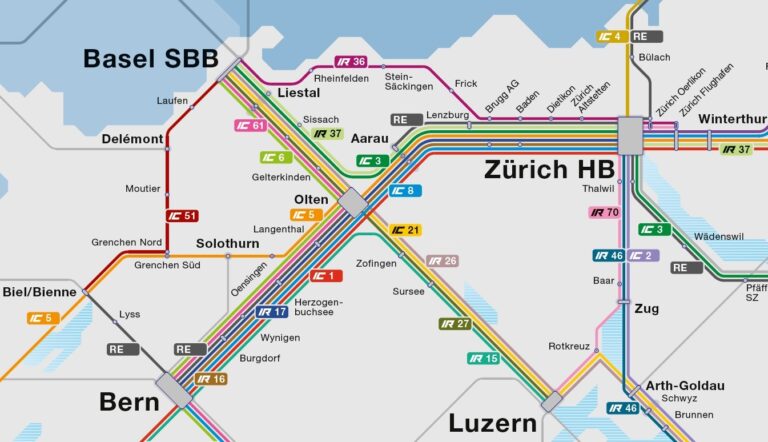
Algorithms and methods for the construction of conflict-free, macroscopic timetables
Along with increasing globalisation, the strategic importance of transport infrastructures for society and the economy are also growing. Demands related to capacity and reliability in rail traffic are increasing. At the same
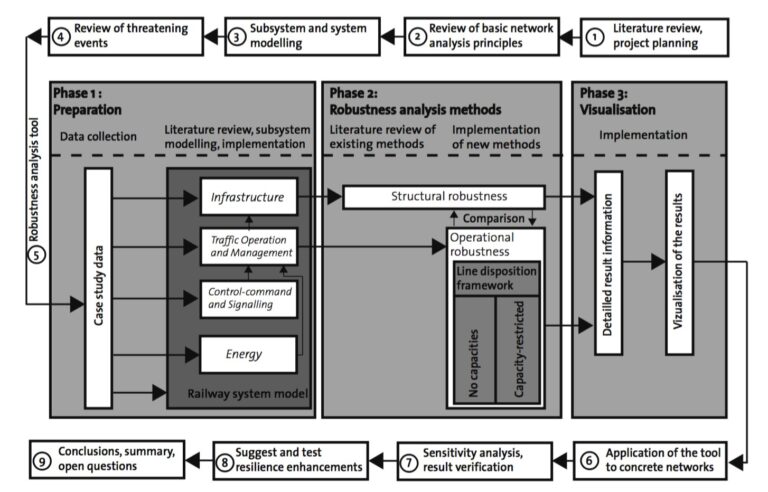
Stability of railway networks and their expansion dynamics during major disruptions
Background Numerous disruption incidents can affect the operation of public transportation systems so much that (large) parts of the network can no longer be served. In addition to natural events, technical or
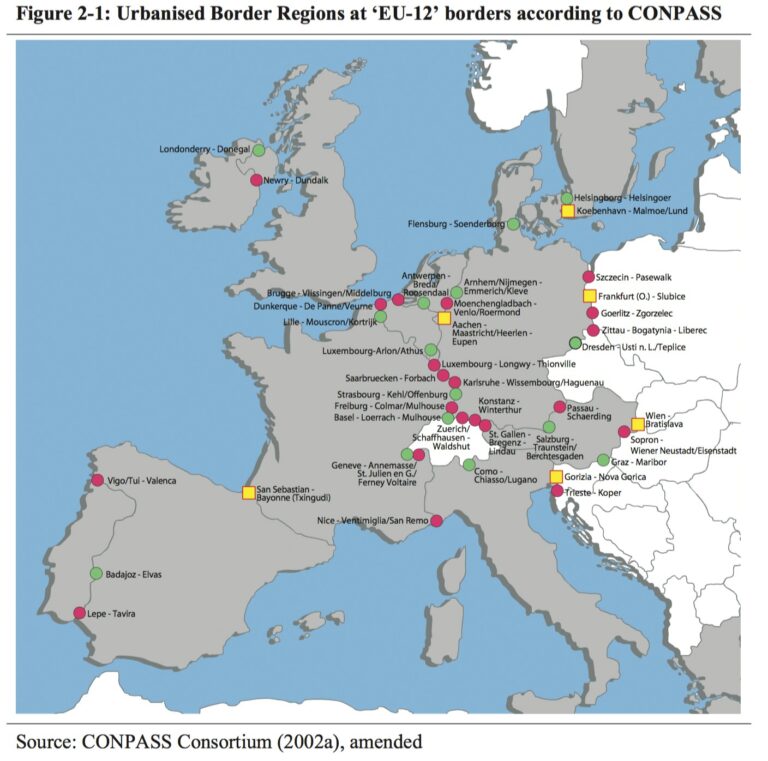
Local Public Transport in Cross-Border Agglomerations
In times when most European agglomerations are affected by congestion, local public transport is one of the most important elements to promote the development of conurbations. Agglomerations extending over international boundaries are
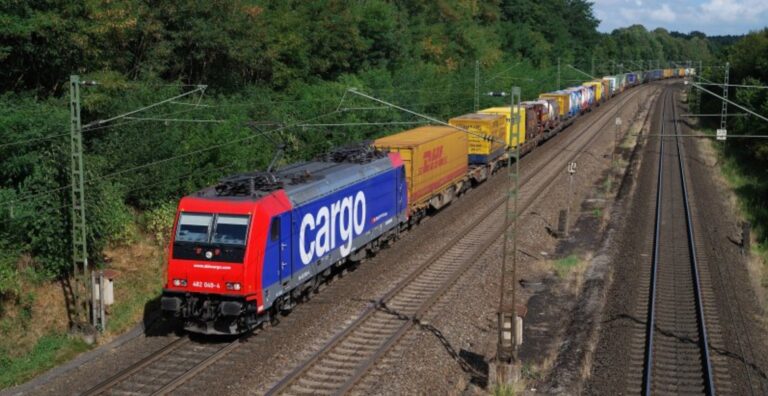
Increase of Productivity in Railway Freight Transportation through a Systematic Integration of Client Knowledge into Operational Planning
In order to survive intermodal competition, freight trains are forced to offer their clients a high level of flexibility. However, fulfilling this promise for flexibility is associated with noteworthy financial risks due
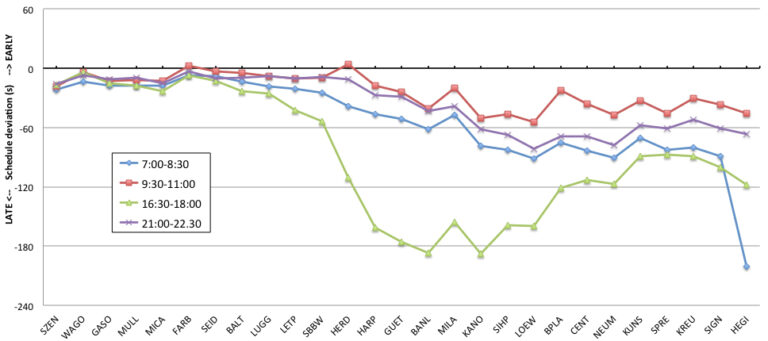
Improving Reliability in the Planning and Operation of Urban Bus Lines
High quality public transport systems are characterized not only by their large capacity and high operational speeds, they must also provide a reliable service. This is important because reliability has an effect
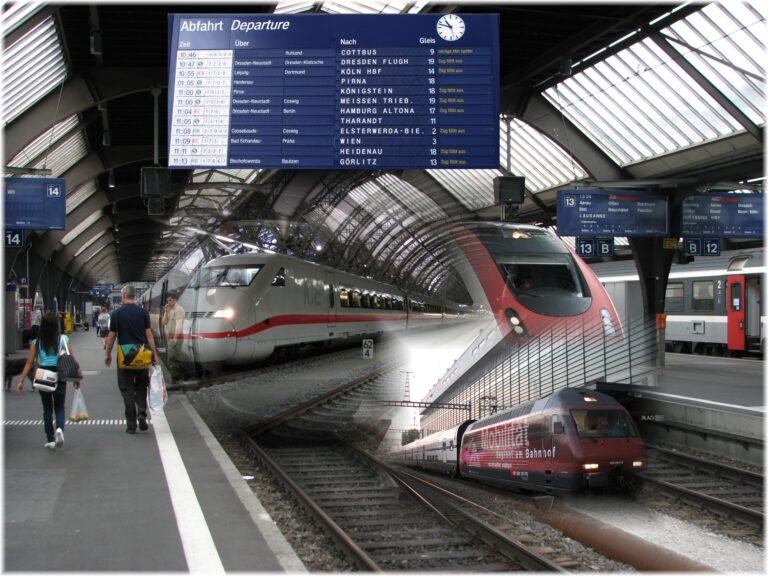
Predicting the duration of disruptions of railway operation, disposition and event communication
Good railway systems distinguish themselves through high reliability and availability. Nevertheless, operational disruptions through internal or external influences cannot always be avoided. The goal set for this postdoctoral work is to raise
![Colli di bottiglia della capacità ferroviaria 2020 (rosso: strade congestionate / svincoli) [UVEK 09]](https://xoxo.capsule.ch/wp-content/uploads/2017/04/Dissertation-Patrick-Frank-Kopie-768x523.jpg)
Methodology for efficiency evaluations of capacity expansion for existing railway networks
The goal of part of this dissertation is to prove that it is methodologically possible to conduct a consistent capacity evaluation and efficiency estimation for expansion measures even in early project stages.