Prof. Dr. Kay W. Axhausen | Traffic and Transport Planning
Traffic planning
Professur Axhausen’s focus is on teaching, research and consulting in the field of traffic planning and its relationship to spatial planning, the environment, society and the economy. One main point is the measurement and modelling of traffic behaviour and the development of simulation models of traffic. Another is the analysis of traffic decisions by individuals and institutions and the availability of tools for the support of these decisions.
NSL Forum & Cycling Research Board
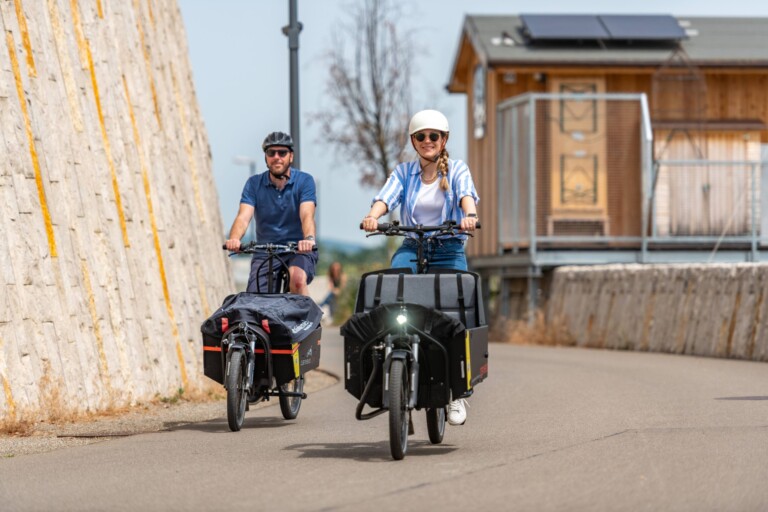
Digital Twins for Europe’s Future Mobility 4 – 6 September 2024 | ETH Zürich, Hönggerberg, HIL E3 and HIT. Today’s design reflects the car-oriented consensus, which was formulated between the 1930’s and
Difference-Oriented Urban Planning (DiffUrb)
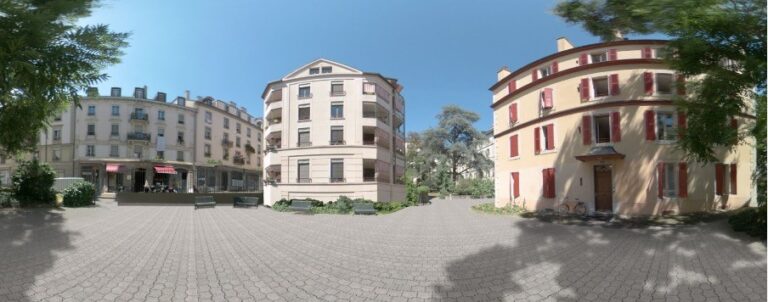
Cities are characterized by a pluralism of people and uses. This fact is becoming increasingly relevant for the practice of urban planning. Any handling of differences regarding living conditions and spatial and

Agent-based tracking of disease spread with dynamic models of travel behaviour in a pandemic
Epidemic models are essential tools to coordinate all aspects of the response to pandemics. Models can inform policy makers on strategies for vaccinations and testing, but also to trigger mitigation measure such

MOBIS-COVID-19. Mobility behaviour in Switzerland – Coronavirus study
To slow down the spread of the coronavirus, the population has been instructed to stay at home if possible. This measure consequently has a major impact on our daily mobility behaviour. But
Substitute Behaviour of Rail and Bus Passengers Travelling Long Distances (+50km) in Switzerland
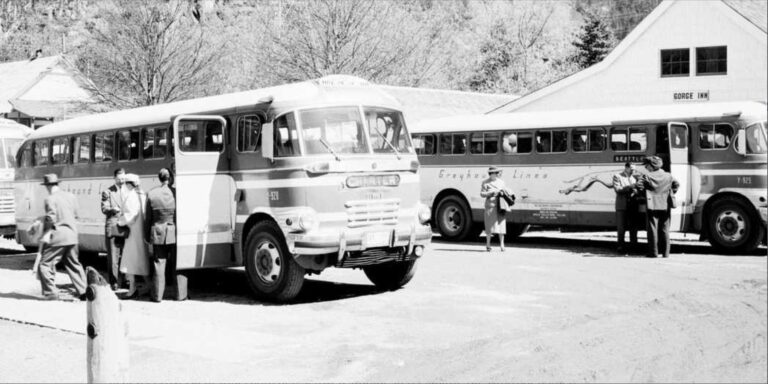
In transportation planning and policy, the effects of non-traffic variables – namely, any qualitative and cognitive-emotional characteristics of households and individuals that cannot be measured directly – on the choice of traffic

The influence of non-traffic variables on mode choice (SVI 2015/007)
In transportation planning and policy, the effects of non-traffic variables – namely, any qualitative and cognitive-emotional characteristics of households and individuals that cannot be measured directly – on the choice of traffic
Continuous Target Based Planning
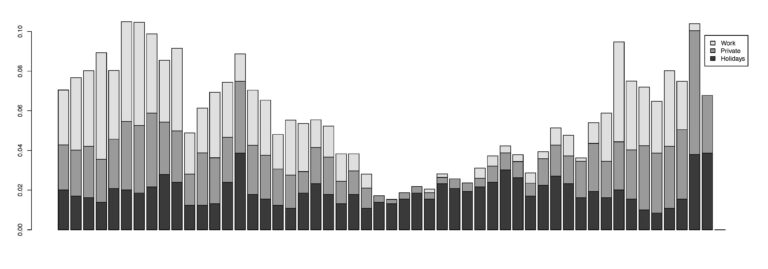
An important aspect of the creation of models for traffic planning is the question of the need for movement in the model. If one uses a microscopic model in which individual persons
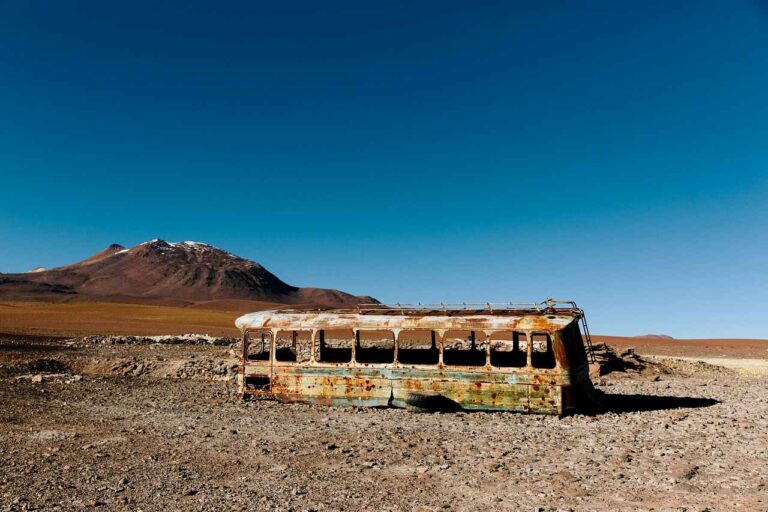
Post-Car World
The goal of this project is to explore the future of mobility through the role of the car. The main originality of this research is to raise the following problem: «What, if

Mobility Biographies
A Life-course Approach to Travel Behaviour and Residential Choice (D-A-CH) In recent years, the mobility biography approach has been developed to study stability and changes in travel behaviour of individuals over their

Models without (personal) data?
Travel demand models have massively increased their data demand in scope and scale, and, as a consequence, their complexity has increased substantially. At this point, it is tempting to contradict this trend

Valuing (travel) time: Models and data for activity scheduling
«Time is money» is a common refrain today, but it raises some questions: What is time? How much money? Self-reflection tells us that we value time in different ways: Spending time playing
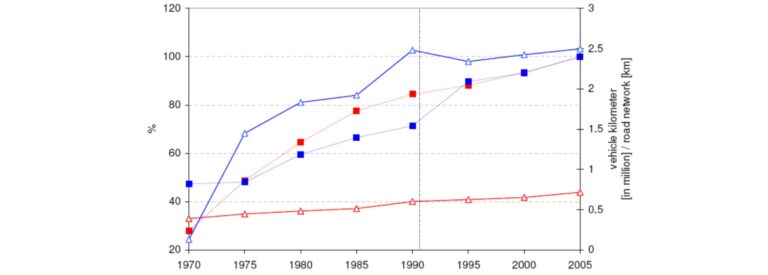
Spatial Accessibility and the Dynamics of Commuter Integration in Germany and Switzerland 1970-2005
The central theme of this investigation is the change in structure of professional commuter patterns of travel, and their behaviour as a function of the dynamic of spatial accessibility and population dispersion
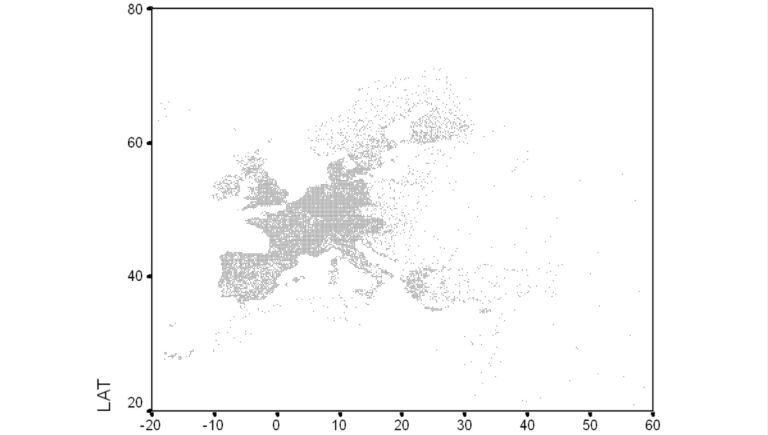
Design an Application of a Travel Survey for European Long-distance Trips Based on an International Network of Expertise
Within the fifth Framework Programme, the European Commission, Directorate-General for Energy and Transport, has started a project on long-distance passenger mobility in co-operation with an international consortium of firms and research organisations.
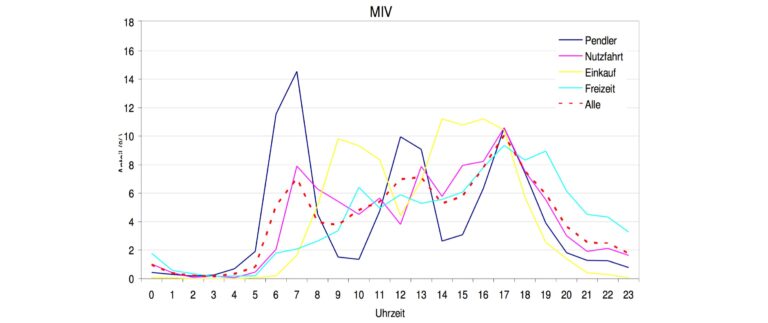
Daily Travel Matrixes in Passenger Transportation
Knowledge of the transportation demand variation over the course of the day is an essential prerequisite for the planning and operation of traffic systems as well as the evaluation of infrastructural and