Prof. Dr. Bryan T. Adey | Infrastructure Management
Infrastructure Management
The Chair of Infrastructure Management has defined its goal as improving the construction and management of infrastructures. The focus is on optimising the processes of decision-making – from general planning for the entire network down to planning the details of specific projects. This will be achieved through teaching the fundamentals of infrastructure management as well as through high-level research at the forefront of our field.
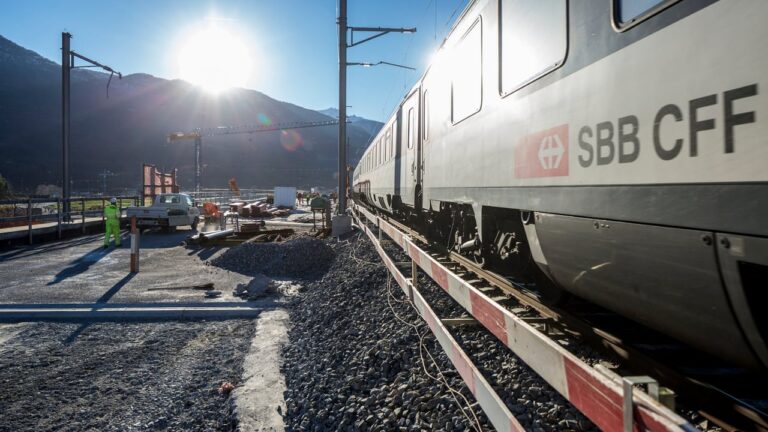
Maintaining train schedule STABILITY and managing time table reserves via digitalized railway intervention planning
The future of rail transport will be one where trains carrying passengers and goods flow seamlessly from their origins to their destinations. Potential disruptions due to train incidents will be foreseen with

Multi-Stakeholder Decision support framework to identify and evaluate resilience improvement interventions for interdependent infrastructure systems
Infrastructure systems are susceptible to hazard events, which disrupts their functionality leading to direct and indirect consequences for their stakeholders as well as the public. Therefore, infrastructure managers need to execute interventions
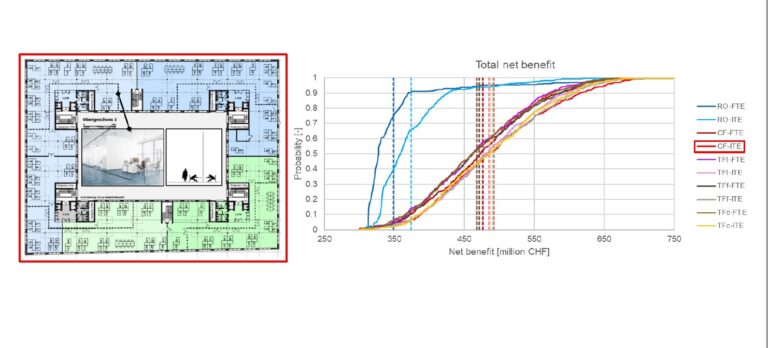
Future-proof urban development. Evaluating the impact of flexible assets in coping with the uncertain future conditions
The project was funded by the Network City and Landscape (NSL) to investigate the impact of flexible designs in coping with the uncertain future offices demand. The potential growth in the home-office

Future-proofing strategies FOr RESilient transport networks against Extreme Events (FORESEE)
System-wide transportation risks are not well understood across modes, regions, and critical interdependent sectors, creating uncertainty about risks resulting from a major system disruption. There is a lack of resilience schemes, especially
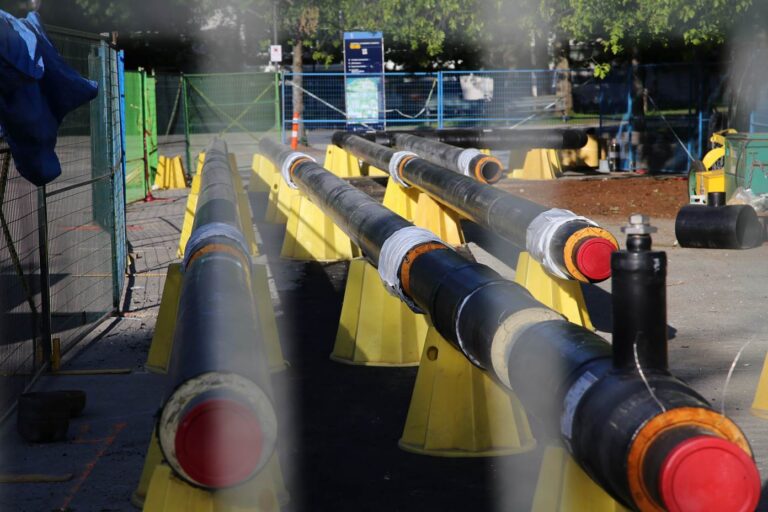
An Optimal Sustainment Measures Programme for Urban Infrastructure Networks
Urban infrastructure networks are the lifelines of modern urban society. They provide water, electricity, gas, telecommunications and mobility. In order to continue to provide these services, the networks must be maintained, repaired,