EiR PD Dr. Joris Van Wezemael, Dr. Markus Nollert | Spatial Transformation Laboratories (STL)
The Spatial Transformation Laboratories (STL): Laboratories for Spatial Development
The challenges of spatial development call into question the boundaries between spatial planning, urban development, social sciences, and computer science. New value-creating models, civic-tech, and citizen-science approaches are rattling the walls of the ivory tower. In practice, an open-space primacy will apply in the future instead of a lot-based fetish. In the future, planning may no longer be measured by plans, but by impact. This requires better databases and new procedures as well as a dynamic monitoring and adjustment of planning results.
Universities, politics, and the development industry all have at least an internal, common goal of developing settlements. But what does that mean in concrete terms, in practice, but above all for the promotion of young talent and research?
Spatial development is not a single discipline, but the focus of many disciplines – within ETH Zurich and in political, civic and social, and economic practice. In the past, academic spatial planning has already stressed that its laboratory represents real life. We now want to consistently deliver on the promise of this programmatic attitude.
- An elementary component of every laboratory is the experimental testing of well-founded theses. Together with partners from business, civil society, administration, and politics, we test new concepts in settlement areas for a specific period of time, monitor their performance and assess the risks of their implementation.
- Innovation increasingly happens through the novel combination of the already existing. Strategic partnerships to other disciplines within the university but also to grass-roots movements and established tech companies distinguish the STL as incubators of innovations.
- In teaching, we privilege design, interaction, reflection, and experiments. Corresponding teaching formats serve not least the networking of students in the NSL field, but also the recombination of stakeholders, technologies, and practices from business and politics.
The goal of the laboratories is to gain knowledge: productive failure, experiences based on resilience, prototypes, and innovative approaches are the means and goal of our future-oriented research. Together with practice and science, the STL want to set a milestone in the learning curve of spatial development.
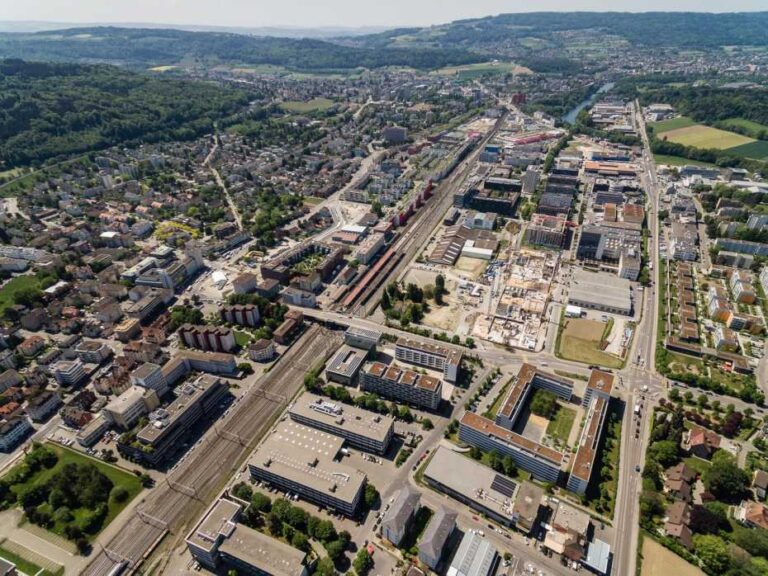
Focus Design
The Spatial Transformation and Design unit explores processes and potentials of spatial transformation and its consequences from neighbourhoods to transnational scales. Its research focuses on mechanics of change and methods for collaborative
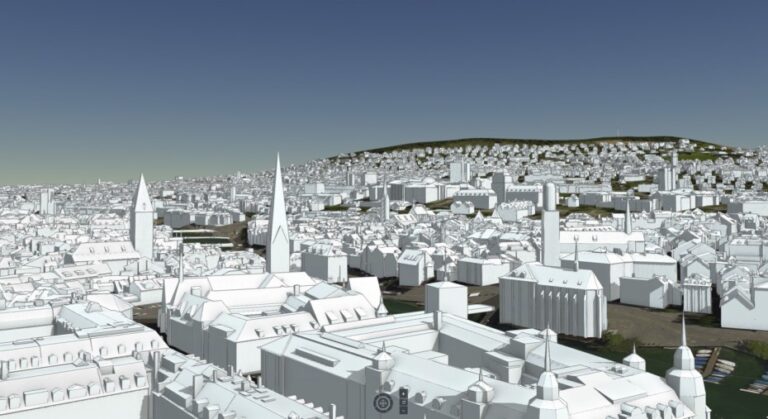
Focus Policy
Inward development calls for open modes of governance After fifty years of spatial development not sustainable with regard to land use, energy consumption, or infrastructure costs, the only alternative to overcome this
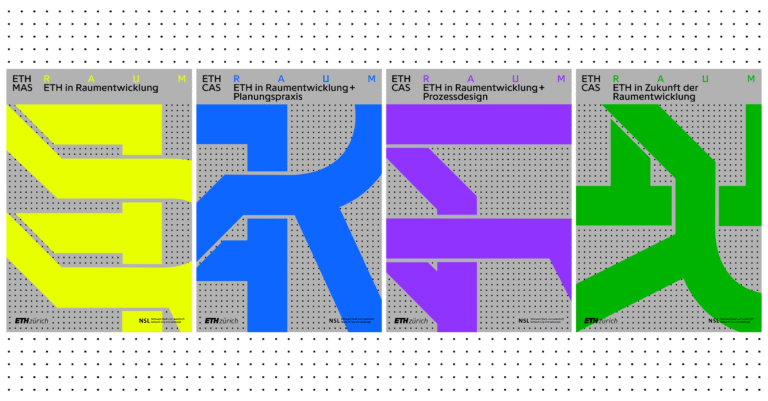
ETH RAUM – The New Platform for Spatial Development
ETH RAUM is the new ETH platform offering a broad range of courses in spatial development. The MAS and the three new CAS programmes focus on spatial development, planning practice, process design,