Dr. Anastasios Kouvelas | Traffic Engineering and Control
SVT mission statement
Until 2018, the leader of the group has been Dr. Monica Menendez, when she moved to the New York University in Abu Dhabi. Since August 2018, her successor as Director of the research group has been Dr. Anastasios Kouvelas. The mission of the Traffic Engineering and Control group is to:
- generate new knowledge about modelling, simulation, optimization, and control of traffic flow in all kinds of vehicular networks.
- transfer this knowledge through teaching, further education, and applied research, particularly through studying large-scale transport systems, and the spatial and temporal dynamics of traffic congestion.
The main areas of expertise are traffic flow theory, systems and control theory, and optimization, all applied to traffic management problems. The research focuses on deriving real-time solutions based on methodologies from automatic control theory and operations research. The group develops algorithmic solutions that are components of intelligent transport systems and run in operational centres.
The recently emerging technologies in the field of autonomous vehicles have broadened our research topics, as the autonomous mobility industry calls for efficient operational solutions. In order to achieve this, the SVT team is multi-disciplinary, consisting of researchers with backgrounds in civil, electrical, and mechanical engineering, computer science, control, and operations research.
The research group is interested in expanding its work on the design of advanced management strategies for urban networks that will use connected vehicles (vehicle-to-infrastructure, infrastructure-to-vehicle, and vehicle-to-vehicle communication) to improve traffic operations. In addition, there will be an effort to develop efficient network-wide control strategies that minimize the environmental impact of traffic operations and lead to equitable and sustainable urban transportation systems.

Designing anti-fragile large-scale traffic frameworks
Traffic optimisation Goals Design and develop a framework to fuse physics knowledge in the design of the large-scale system optimisation by means of machine learning, control theory, and simulation in order to

RECCE – Real-time highway traffic estimation and control
This project focuses on developing integrated control solutions (i.e. co-ordinated ramp metering: RM and variable speed limits: VSL) to manage congestion on motorway networks. An efficient real-time solution of this problem requires
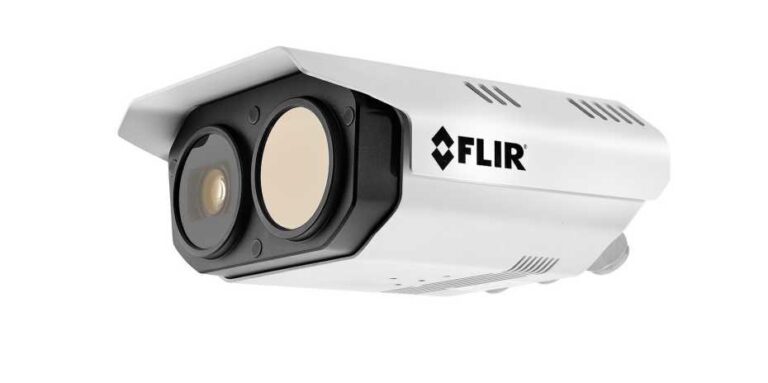
OptFlow – Travel-time estimation with FLIR cameras sensors
Novel sensor technology represents a significant potential for traffic management in cities. Thermal cameras in particular have recently gained considerable importance and are now also to be used in the Traffic Management

SODA – Self-Organized, Distributed, and Adaptive Traffic Control
The main objective of this research proposal is to develop a smart traffic-management system that works in an automatic, distributed, self-organized way, to control (i) traffic signal lights and (ii) route guidance

Time-to-Green
In light of the newer developments in transportation systems, the Dienstabteilung Verkehr (DAV), the Traffic Service Department of the City of Zurich is interested in upgrading and preparing its traffic-management systems for
Evaluation of Self-Control
In order to meet the increasing demand for mobility and, above all, to reduce the resulting problems such as congestion, time loss, negative impacts on the environment, etc. in urban regions, a

Traffic Control Beyond Modes
Future developments of mobility pass through a phase of complementarity and blending of modes. From this point of view, the potential benefits (i.e. societal, monetary) of mobility management across modes is very