Growing Schools Prototype: A Socio-Ecological Framework Addressing the Current Urbanization Challenges
Colombia has suffered an armed conflict for over 50 years. As a result, more than 1 million children lack access to education with a deficit of 3’000 schools and more than 8 Million civilians displaced from their homes. Growing Schools Prototype is a strategic up-scaling concept for replicating schools adapting to different climates and consolidating and growing communities into legitimate neighbourhoods.
In 1929, Le Corbusier claimed to have sketched the urban design for Rio Janeiro from an airplane. Le Corbusier’s aerial discovery of South America from a faraway above gave rise to a design with superimposing infrastructures over the existing landscape and social fabric.
How can Current Urbanization Challenges in the Global South be Addressed from a Socio-Ecological Contextual Framework?
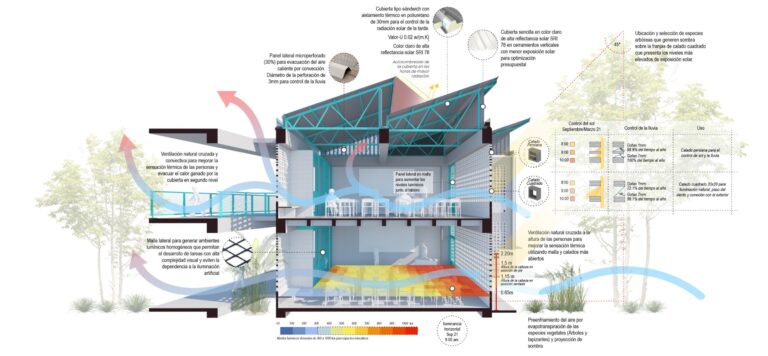
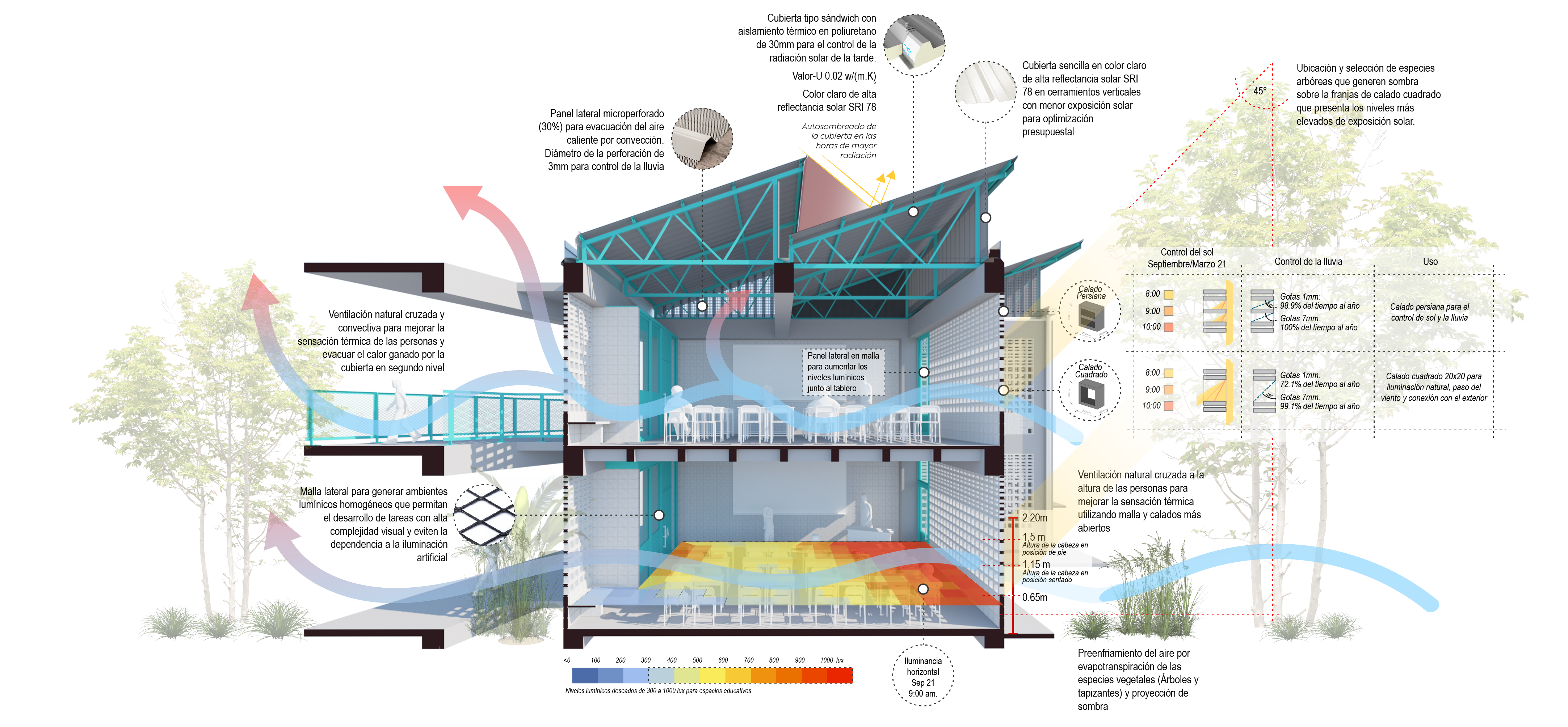
Invited by the city of Cartagena, we have developed a strategy to re-design and re-urbanize a 4 km2 area in Ciudad Bicentenario: the new biggest project of social housing in Colombia, which, over the next decade will transform into a city for up to 50’000 citizens. Ciudad Bicentenario has welcomed so far 16’000 migrants, 50% of them children of school age and deprived of education access. An urgent lack of 3‘000 schools in the country requires building prototypes for schools providing learning spaces and contributing, at the same time, to create a new sense of community. In the context of our stakeholder group, we have co-designed a school that pushes the limits of its typology becoming a broader integrated social infrastructure. How can we make available a learning facility after its daily schedule? Our Growing Schools Prototype provides a framework for community programmes such as sports, culture, work, health, and agriculture and a network of integrated ecological infrastructures for mobility and public space. We aim to curate a culture that looks at the broader benefits of the space, rather than focusing on individual activities. Utilizing a similar material palette to the one used generically in the rapid building of schools by construction companies, we re-design prototypical details that embrace the challenge of staying below the maximum temperature of 28°C inside the classrooms.